Optimising Refractive Outcomes Begins with the Ocular Surface
Dry eye disease remains the most common complaint after corneal refractive surgery — and one of the main drivers of postoperative dissatisfaction.
The underlying mechanism is multifactorial, yet temporary corneal denervation appears to play a key role. Reduced corneal sensitivity disrupts the cornea–lacrimal gland and cornea–blink reflex loops.
When sensory input decreases:
→ Reflex tear secretion declines
→ Blink dynamics change
→ Tear evaporation increases
Add pre-existing meibomian gland dysfunction — and the tear film becomes even more vulnerable.
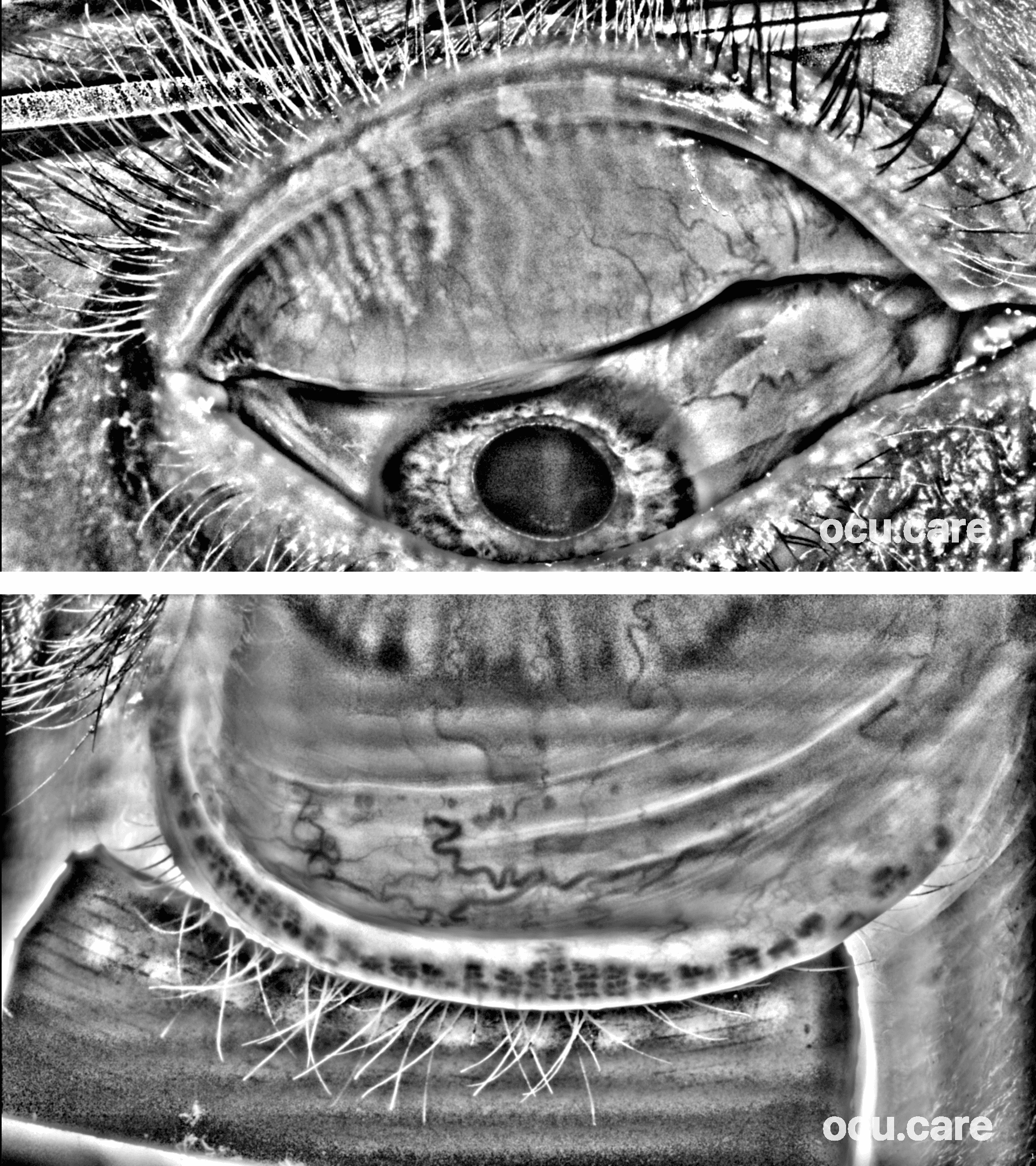
Shown on the right is the meibography of a man in his mid-40s considering refractive surgery (OSDI-6 score: 4).
Although his symptoms were minimal, imaging demonstrated significant meibomian gland atrophy.
If neurosensory disruption is layered on top of pre-existing gland compromise, can we do more preoperatively to help our patients achieve the best possible outcomes?
Can proactive ocular surface optimisation improve not only comfort — but also visual quality and long-term satisfaction?